
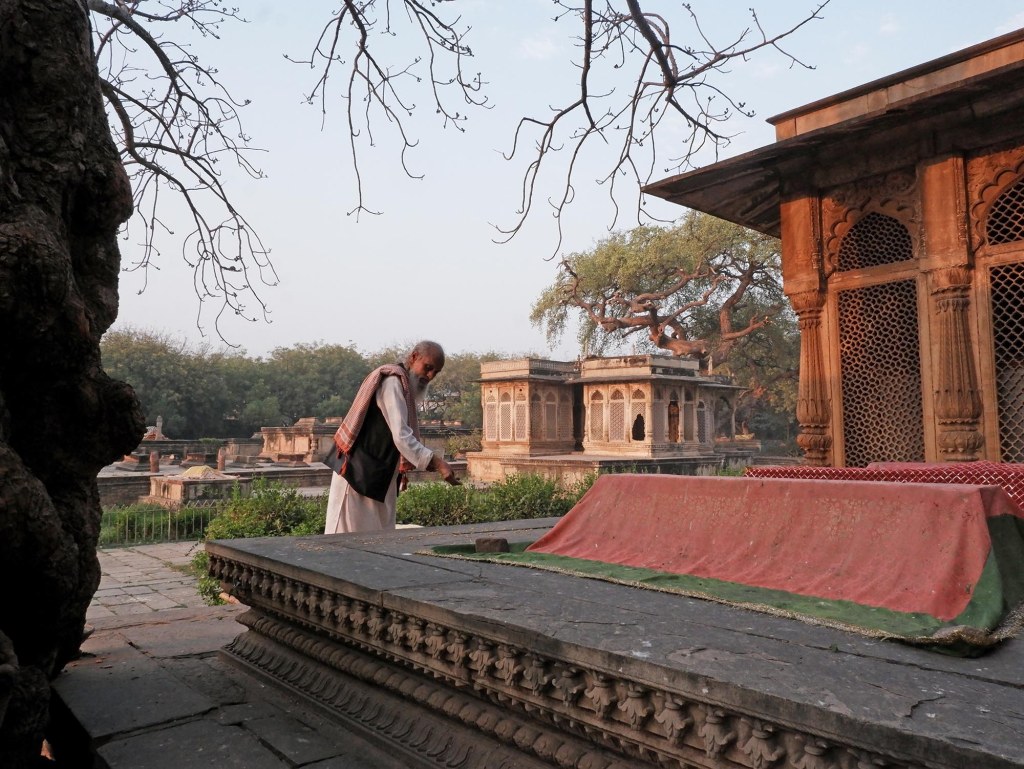
Sajjan, servant of a Dargah.
Son of a woman whose name was Bibbi Begum.
Sajjan’s father Munnu worked in a textile factory- Ghanshyam Das Birla’s Gwalior Suitings, Gwalior
Munnu was a Bhajan and Qawwali singer.
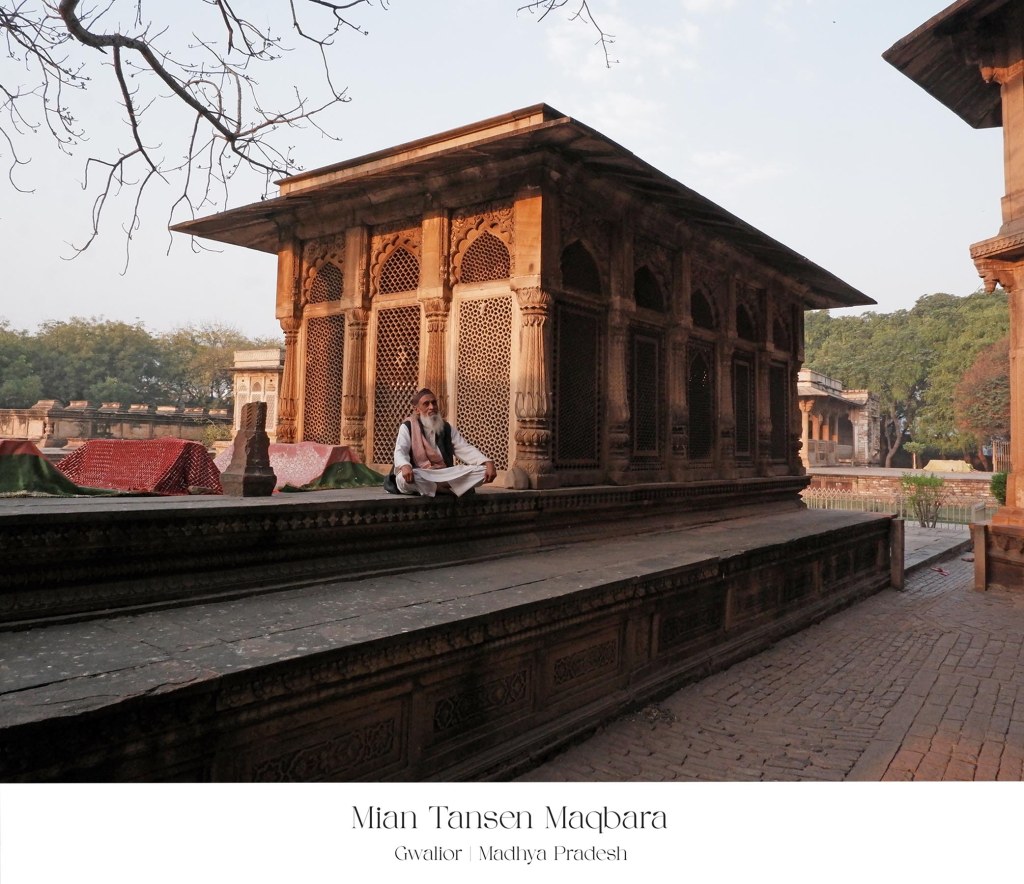
Gwalior | Madhya Pradesh
About the heritage site:- The Mosque complex in Gwalior endures as a revered religious shrine.
Devotees of diverse faiths gather her to seek blessing from the shrine of Sufi saint Muhammed Ghouse.
Muhammad Ghaus’ tomb, buit sometime after his death in 1563 during Emperor Akbar’s rule, is one of the fine specimens of early Mughal architecture.
Muhammed Ghaus was held in high esteem by three Mughal emperors: Babur, Humayun and Akbar.
After assisting Babur in conquering Gwalior Fort, Muhammad Ghaus was granted a substantial area of land where he created a shelter place where people with artistic and creative interest meet to express their talent.
Many singers and artists received patronage and support from Muhammed Ghaus to pursue their passion.
One such student was Ramtany Misra, more popularly known as Sangeet Samrat Tansen, who eventually became one of the Nine Jewels (Navratnas) in Emperor Akbar’s court.
Tansen’s initial music training was under Swami Haridas.
Later on, Tansen became an admirer of Muhammed Ghaus, who brought Sufi influence in his music.
Tansen’s tomb, a fairly simple structure with an open Pavilion and a tamarind tree, is situated right next to his teacher’s grand mausoleum
The places where Sufi saints are buried are considered very holy.
Sometimes, disciples and devotees close to the saint are also buried in the Dargah complex.
 Mother Earth Stories
Leave a comment